

The Abacus.
2,000 Years of Trustworthy Computation..
The abacus — known as the suanpan (算盘) in China — is the world's oldest computing device. For over 2,000 years, it has been the most reliable tool for calculation ever created. We named our company after it because we believe AI should be just as trustworthy, precise, and dependable as the ancient abacus. From counting beads to counting tokens — the principle endures.
What Is an Abacus?
The abacus is the world's oldest computing device — a manual calculator made of rods and beads that has been used for arithmetic for over two millennia. Here is the definition, how it works, and why its meaning endures.
Definition & Origins
The abacus is a manual computing device consisting of a frame with rods and beads used for arithmetic calculations. First developed in ancient Mesopotamia and refined into the Chinese suanpan around 200 BC, it remains in active use today.
A calculating frame with rods strung with movable beads — the original definition of an abacus
The frame-bead-rod structure enables place-value arithmetic without written numerals
Recognized as the world's oldest computing device, predating written number systems
Predates the Hindu-Arabic numeral system by centuries, proving computation doesn't require notation
How an Abacus Works
Each rod represents a place value (ones, tens, hundreds). Beads are moved toward the dividing bar to represent numbers. The upper deck holds "heaven beads" (value 5), the lower deck holds "earth beads" (value 1).
Each rod represents a decimal place value — ones, tens, hundreds, thousands, and beyond
Upper deck "heaven beads" (each worth 5) and lower deck "earth beads" (each worth 1) combine to form any digit
Addition, subtraction, multiplication, and division are performed through systematic bead movements
The Chinese suanpan uses 2 heaven beads and 5 earth beads per rod, allowing representation of values 0–15 per column
Why the Abacus Endures
Despite electronic calculators, the abacus is still taught in schools across Asia and used by merchants worldwide. Its endurance proves that when computation is trustworthy and transparent, it stands the test of time.
Still actively used in Japan (soroban), China (suanpan), and India for commerce and education
UNESCO recognized zhusuan (珠算, Chinese bead arithmetic) as Intangible Cultural Heritage in 2013
Trained operators consistently outperform electronic calculator users in speed competitions
Represents transparent computation — every step of every calculation is visible to the operator
The Chinese Suanpan: History & Evolution
The suanpan (算盘) is the most iconic form of the abacus and the backbone of Chinese calculation for over two thousand years. From ancient commerce to UNESCO heritage — its story is the story of trustworthy computation.

The Suanpan (算盘)
The Chinese suanpan is the most iconic form of the abacus. It features a distinctive 2/5 bead configuration and has been the backbone of Chinese commerce, banking, and government administration for over two millennia.
Ancient Origins
The suanpan dates to at least 200 BC during the Han Dynasty. The oldest known written reference appears in the 2nd century BC text "Supplementary Notes on the Art of Figures" by Xu Yue. Archaeological evidence suggests proto-abacus counting boards existed even earlier in Chinese antiquity.
From Commerce to Banking
For centuries, the suanpan was the primary computational tool in Chinese banks, trading houses, and government tax offices — the original "banking calculator." Merchants across the Silk Road carried suanpan to settle accounts, and imperial bureaucrats used them to calculate tax revenue across provinces.
UNESCO Heritage
In 2013, Chinese zhusuan (珠算, bead arithmetic) was added to UNESCO's Representative List of the Intangible Cultural Heritage of Humanity — recognizing the suanpan as one of humanity's most important inventions and a living tradition that continues to shape mathematical education worldwide.

From Counting Beads to Counting Tokens
The abacus represented a revolution: making computation reliable, transparent, and accessible. Today, Abacus (the company) applies the same principles to artificial intelligence for regulated industries.
Trustworthy by Design
The abacus works because every calculation step is visible and verifiable. Our AI infrastructure applies the same principle — full audit trails, explainable decisions, transparent computation. When you can see how an answer was reached, you can trust it.
Built for Regulated Industries
Just as the suanpan served Chinese banks and government, our on-premise AI serves modern banks, healthcare, and insurance — industries where computational trust is non-negotiable. Data never leaves your infrastructure, just as beads never left the frame.
2,000 Years of Reliability
The abacus has never had a security breach, a data leak, or a hallucination. We're building AI that aspires to the same standard — deterministic, auditable, and relentlessly reliable.
The Abacus Through the Ages
From beads on bamboo rods to large language models on dedicated hardware — the principles of trustworthy computation haven't changed in 2,000 years.
| # | Feature | Ancient Suanpan | Modern Abacus AI |
|---|---|---|---|
| ROW-01 | Computation | Beads on rods | Large language models on dedicated hardware |
| ROW-02 | Trustworthiness | Every step visible to the operator | Full audit trails for every AI decision |
| ROW-03 | Data Security | Data never left the room | Data never leaves your infrastructure |
| ROW-04 | Users | Merchants, bankers, tax collectors | Banks, hospitals, insurers, credit unions |
| ROW-05 | Speed | Faster than pen-and-paper | Sub-50ms AI inference |
| ROW-06 | Reliability | 2,000+ years without failure | 99.99% uptime, EY-attested accuracy |

2,000 Years of Computational Trust
From the suanpan to the Go1
The ancient Chinese abacus made calculation trustworthy. Abacus makes artificial intelligence trustworthy. Same principle. Same name. New era.
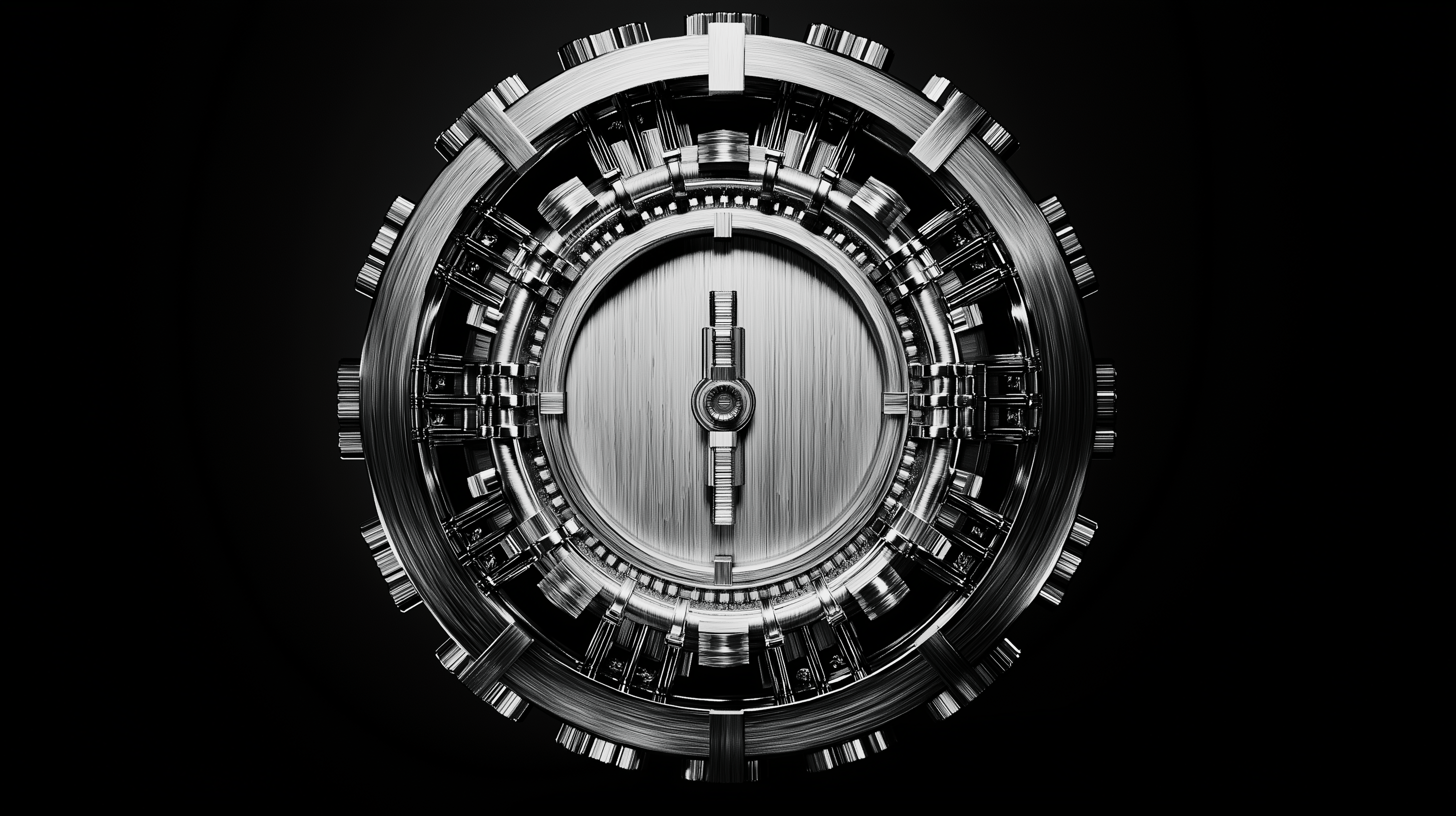
Named after the world's oldest computer.
We chose the name Abacus because we believe AI should be as trustworthy, transparent, and reliable as the ancient suanpan. Our on-premise AI infrastructure carries forward 2,000 years of computational heritage.
Heritage Meets Innovation
The ancient abacus and modern Abacus AI share the same foundational values: trust, transparency, and reliability. These metrics bridge two millennia of computational heritage.
2,000 Years of Trust
The abacus has been trusted for over two millennia. We build AI worthy of the same trust.
200 BC
First suanpan
2026
Abacus AI
Zero Data Has Ever Left
The abacus kept data in the room. Our AI keeps data on your infrastructure.
0
Data egress then
0
Data egress now
Transparent Computation
You could see every bead. You can see every AI decision.
100%
Visible calculations
100%
Auditable AI decisions
200 BC
Origin of the Suanpan
算盘 Chinese Heritage
2,000+
Years of Computational Trust
Unbroken reliability
99.5%
AI Accuracy (EY Verified)
Enterprise-grade precision
0
Data Breaches — Then or Now
From beads to bytes
Deploy AI That Passes Every Audit
900K monthly users went live in under 24 hours. SOC 2 Type II, ISO 27001, and HIPAA certified from day one.
AI infrastructure for regulated industries. On-premise deployment, zero data egress, examiner-ready compliance. Trusted by 900K monthly users processing 8M queries daily.


Go Abacus Corporation refers to Go Abacus Corporation and its affiliated entities. Go Abacus Corporation and each of its affiliated entities are legally separate and independent. Go Abacus Corporation does not provide services to clients in jurisdictions where such services would be prohibited by law or regulation. In the United States, Go Abacus Corporation refers to one or more of its operating entities and their related affiliates that conduct business using the “Go Abacus” name. Certain services may not be available to clients subject to regulatory independence restrictions or other compliance requirements. Please visit our About page to learn more about Go Abacus Corporation and its network of affiliated entities.
© 2026 Go Abacus Corporation. All rights reserved.